


Game Jam
A four-day virtual build sprint, free to enter and open to everyone.
View details: Game JamClosed
Career pathways, courses and events, all in one place.
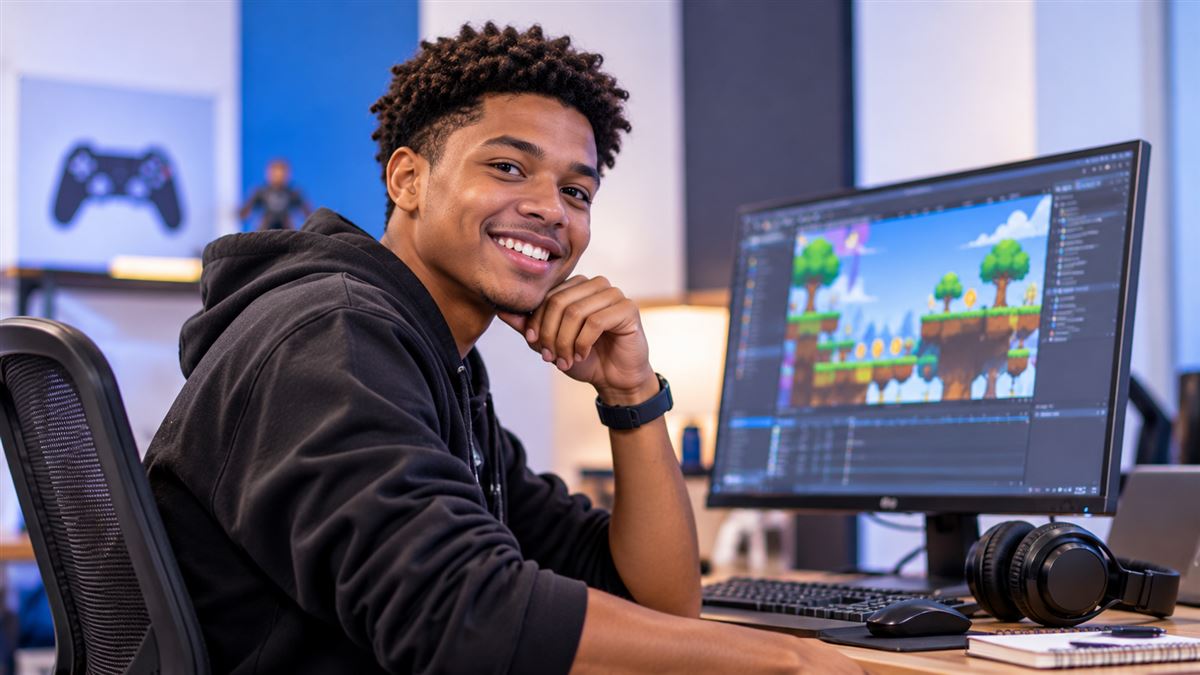
Build playable 2D games with Unity and C#. Create gameplay, fix problems and prepare a finished build to share.


Create the art for a small game world, bring it to life with animation and see it working in Unity.

Explore, create and test ideas with AI while keeping your purpose, judgement and creative decisions in control.

Learn to turn a creative brief into a workable plan, keep a team informed and manage delivery when circumstances change.

Test a creative business idea, price your work and build a practical plan for managing money and protecting what you make.
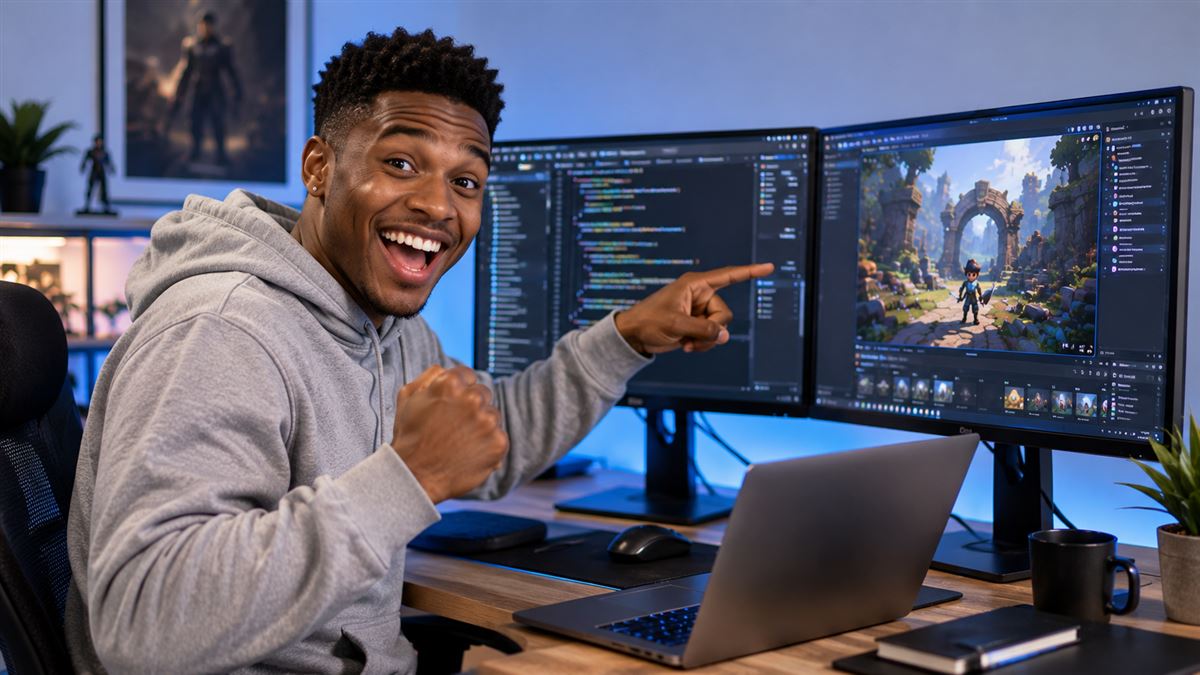
Build a small playable game with Godot. Learn scripting, connect gameplay systems and test your work before sharing it.
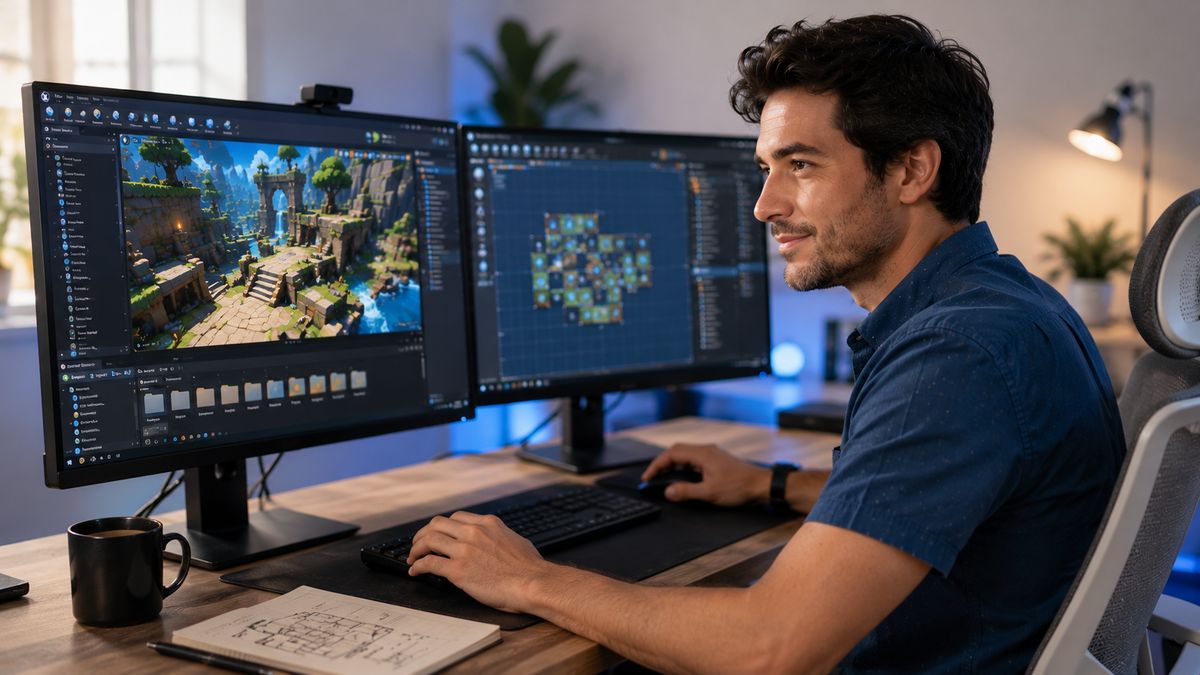
Turn game ideas into testable experiences. Design rules, build prototypes and use player feedback to improve how a game plays.
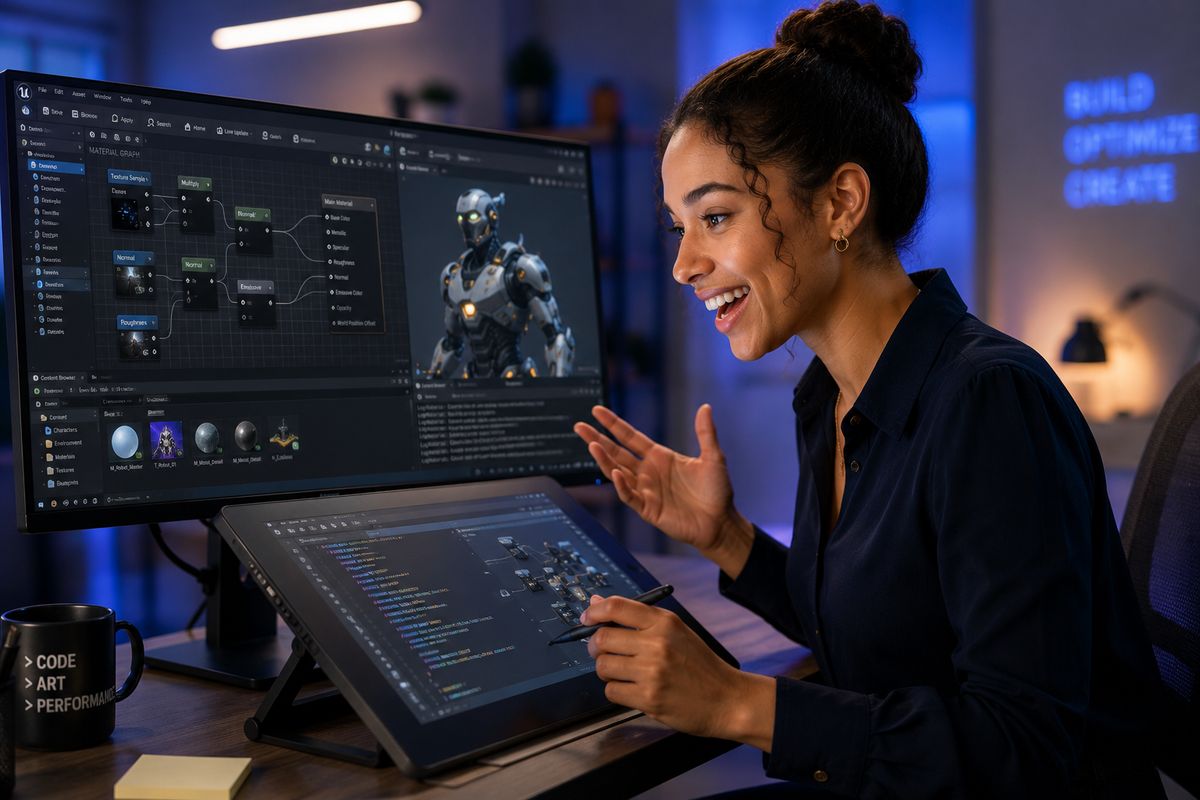
Create an interactive 3D experience in Unreal Engine. Build gameplay with Blueprints, test your systems and prepare a playable build.
Analyse the core loop of a StoryQuest, then design a new gameplay loop for an NPC.
Explore how visual and audio cues guide players, then sketch signposting ideas for a scene.
Complete your Threadbare assignment and show us what you have done.
Investigate a broken spawner to see how one system can affect a whole game's performance, then experiment with fixes.
Take the role of a Producer, form a team, and plan an Adventure Pack for Threadbare.
Playtest a Threadbare-themed platformer and identify bugs or design mistakes as a real playtester would.
Step into a player's shoes and create a concept for real-world merchandise inspired by Threadbare.
Learn the programming concepts used to control gameplay behaviour. This course introduces variables, conditions, loops, functions, objects and basic debugging through small game-related challenges. Learners will break gameplay mechanics into logical steps, write understandable code and create a small interactive gameplay-logic prototype. Examples should be shown in Unity C# and Godot GDScript, but the underlying concepts should remain engine-independent.
Learn how a game engine organises scenes, objects, scripts and reusable content. Learners explore the editor, create an interactive scene, connect scripts to objects and understand the relationship between assets, components, nodes and runtime behaviour.
A four-day virtual build sprint, free to enter and open to everyone.

A two-week intensive where you design and build your own game with AI tools.